Settlement Risk Mitigation
Preventing differential settlement that can cause cracked walls or a tilted structure.

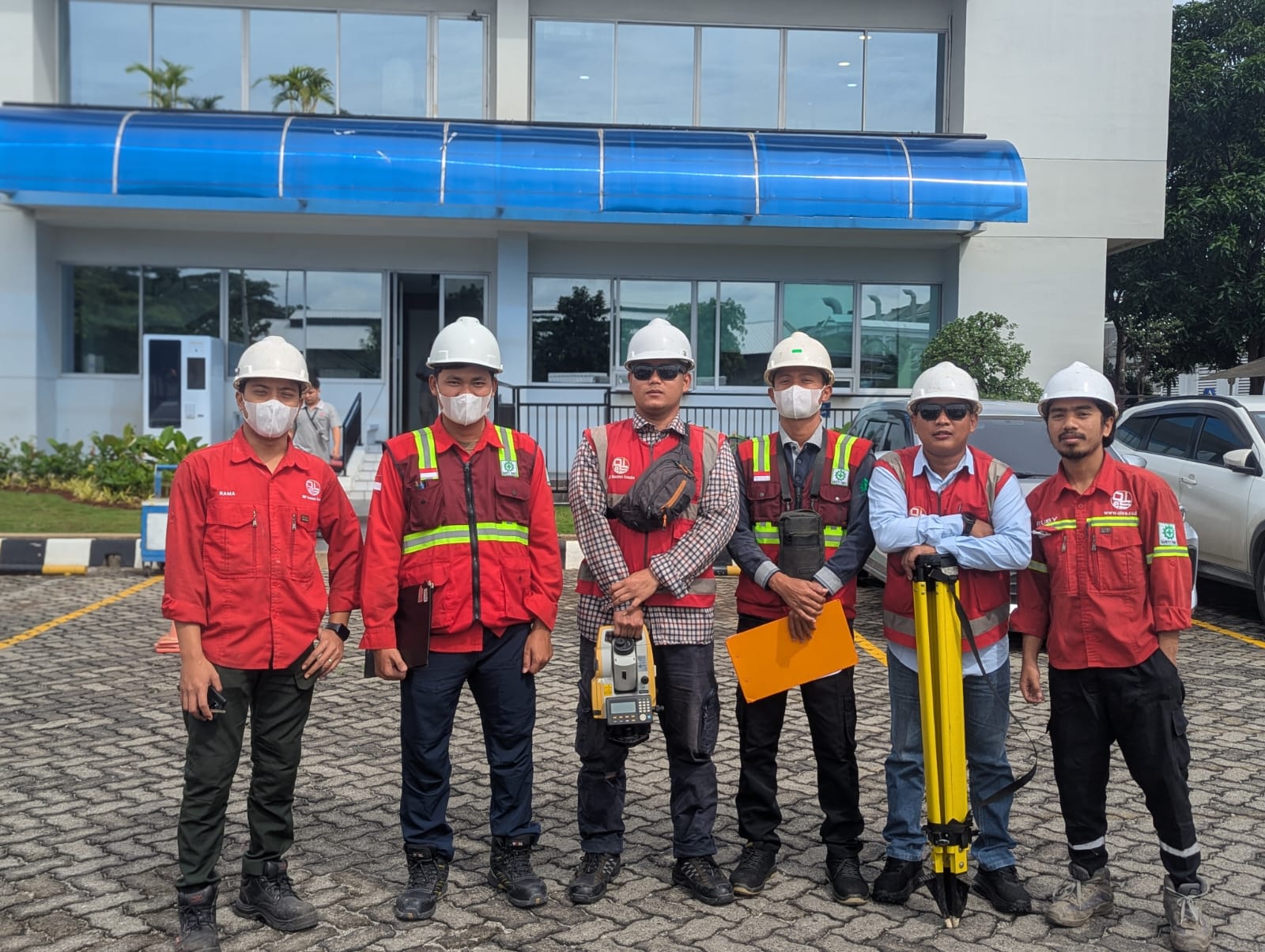
Geotechnical Soil Investigation Services According to SNI & ASTM Standards for Factories and Industrial Warehouses
Soil Investigation (Geotechnical) Services According to SNI & ASTM Standards is a crucial process for assessing land bearing capacity. This step is mandatory before erecting heavy building structures. The accuracy of this testing prevents industrial factory foundation failures. This data directly secures your high-value construction investment.
Geotechnical soil investigation is a mandatory mitigation step before foundation casting is carried out. Neglecting this phase often causes project cost overruns, structural damage, and operational disruptions that harm the company in the long term.
The risk of settlement or uneven ground subsidence is one of the main causes of foundation failure in industrial buildings and production facilities.
Preventing differential settlement that can cause cracked walls or a tilted structure.
Providing technical solutions for construction on slopes or soft soil so it remains solid and stable against planned loads.
Determining the most efficient foundation type and depth so as not to waste material while still meeting safety factors.
Providing accurate soil parameters as the main basis for structural engineers in designing a safe building framework.
Mistakes at the initial stage can trigger major losses throughout the building's lifespan.
Production machine vibrations can accelerate foundation damage if soil bearing capacity is not accurately known.
Uneven settlement can cause tall racks to shift, risking collapse.
Floor slabs frequently traversed by forklifts are prone to cracking if the substructure is inadequate.
Ensuring new construction does not affect the foundation of the old building.
Evaluating the soil's ability to accept additional building loads.
Reducing the risk of subsidence and structural damage due to changing soil conditions.
Carrying out soil tests (Sondir/Boring) to take samples and determine soil layer stratigraphy.
Analyzing soil samples to obtain mechanical parameters such as cohesion values, shear angle, and consolidation.
Load simulation using geotechnical software to predict soil behavior against the structure.
Preparing a final report containing recommendations for the most suitable foundation construction method and soil reinforcement system.
Questions commonly asked by clients regarding Soil & Geotechnical Investigation
To ensure the house foundation doesn't shift, especially if built on former rice field or landfill soil.
A minimum of 2 points representing the building's furthest span.
Yes, our reports are prepared by certified experts and meet SIMBG document standards.
Sondir measures end resistance, while Boring takes soil samples for detailed laboratory testing.